
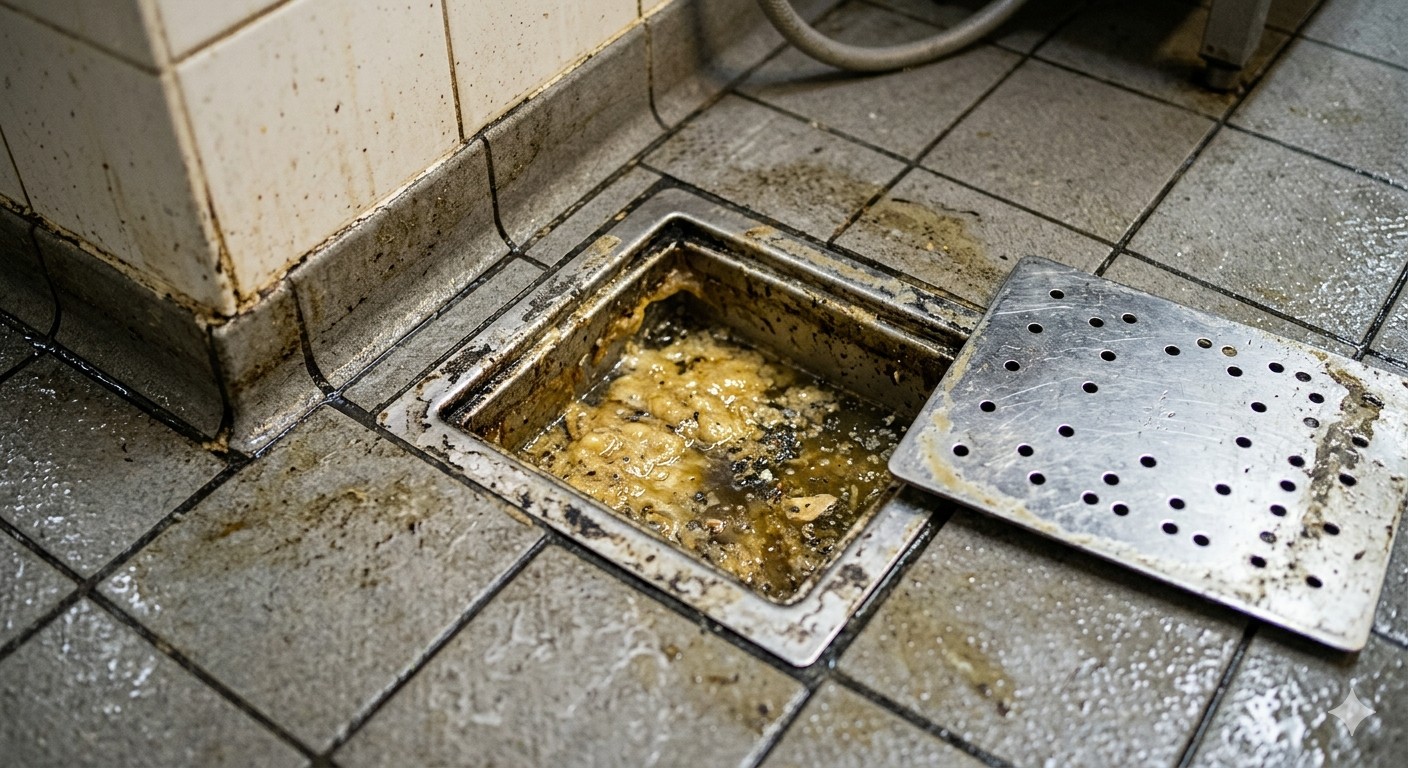
I once walked into a restaurant in Bermondsey that smelt wrong before I even reached the kitchen. Not wrong like “something’s burnt.” Wrong like something had quietly been decomposing for several weeks in a confined space. The chef met me at the pass with the haunted expression of a man who had long since stopped being surprised by bad smells, and pointed me towards a drain in the corner of the kitchen floor.
The grease trap – if you could still call it that – hadn’t been properly cleaned in over a year. It was full. Not nearly full. Full. The overflow had been finding its own way out for some time, which explained both the smell and the increasingly pointed letters arriving from the local water authority.
The restaurant was good. The food was genuinely excellent. But they were weeks away from a fine that would have made their head chef’s salary look modest, and facing potential prosecution under environmental regulations they didn’t even know applied to them.
If you’re running a restaurant in London and haven’t thought seriously about your grease trap recently, this one’s for you.
What A Grease Trap Actually Does – And Why Yours Needs Attention
A grease trap – also called a grease interceptor or grease recovery unit, depending on who installed it and how fancy they were feeling – is a plumbing device designed to intercept fats, oils, and grease before they enter the main drainage system. It works on a beautifully simple principle: grease floats, water sinks. The trap slows the flow of wastewater, allows the grease to rise and collect at the surface, and lets the cleaner water pass through to the sewer below.
In a functioning system, this process happens continuously and invisibly every time your kitchen drains are in use. In a neglected system, it stops functioning properly, the grease accumulates past the point of separation, and the whole lot starts pushing downstream into the public sewer network.
Where Things Go Wrong
The problem isn’t that grease traps are complicated. They aren’t. The problem is that they’re hidden, they don’t make noise, and when they start failing the signs are easy to dismiss – a slightly slow drain here, a faint odour there – until the day they stop being subtle about it.
Grease traps also produce hydrogen sulphide gas as organic matter breaks down inside them. That’s the rotten egg smell that tends to announce itself in kitchens with overdue maintenance. Beyond being deeply unpleasant for your staff and customers, hydrogen sulphide at sufficient concentrations is genuinely hazardous. It’s not a smell you should be normalising.
The Difference Between Passive And Automatic Units
Smaller restaurants typically have passive grease traps – static units under the sink or in a floor chamber that require manual emptying. Larger operations, particularly those with high cooking volumes, often have automatic grease recovery units (AGRUs) that skim collected grease mechanically on a timed cycle. Both types require regular maintenance, but the cleaning schedules and methods differ considerably. Knowing which type you have is the starting point for getting your maintenance right.
The Legal And Regulatory Picture
Here is where the Bermondsey story gets instructive, because the legal framework around grease traps is more robust than most restaurant owners realise – and enforcement has become noticeably more active in recent years.
Fats, oils, and grease entering the public sewer network contribute to what water companies politely call “fatbergs” – the monstrous, solidified accumulations of grease, wet wipes, and general unpleasantness that periodically block London’s Victorian sewers at enormous public expense. Thames Water has spent years lobbying for tougher enforcement, and they’ve largely got it.
Your Obligations Under FOG Regulations
FOG – fats, oils, and grease – regulations require food businesses to take “reasonable steps” to prevent these substances from entering the drainage system. In practice, this means installing an appropriate grease management device and maintaining it properly. Thames Water and other UK water authorities have powers to inspect commercial premises, issue enforcement notices, and pursue prosecution for repeated or serious violations. Fines can reach tens of thousands of pounds, and in cases involving significant sewer damage, civil liability for remediation costs is also possible.
Your local authority’s environmental health team may also take an interest. Grease trap maintenance sits at the intersection of food hygiene, public health, and environmental compliance – which means more than one agency has the authority to make your life difficult if things go wrong.
What An Inspection Involves
Water authority inspections of commercial kitchens typically include a check of your grease management provisions – whether a suitable trap is installed, whether it’s the right size for your kitchen’s output, and whether you have records showing it’s been maintained. That last point is important. Verbal assurances that “we sort it out regularly” carry no weight. Service records from a licensed waste carrier, documenting the dates and volumes of grease removed, are what you need. Without them, you have no defence.
How To Keep Your Grease Trap In Good Shape
The good news – and there is good news – is that grease trap maintenance isn’t complicated when it’s done consistently. The problems almost always arise from neglect rather than from anything technically difficult.
The Daily And Weekly Habits That Make A Difference
Scraped plates before washing make a significant difference to the load on your grease trap. Anything your kitchen team can remove from crockery, cookware, and utensils before it hits the sink is fat and food solids that don’t have to travel through your drainage system. It sounds trivial. It isn’t.
Strainers and basket filters in your sink drains should be emptied and cleaned daily. Pouring hot water and degreaser down your drains regularly – particularly at the end of service – helps keep the pipework between your sinks and the trap clear and free-flowing. Never pour cooking oil directly down the drain, even in small quantities. It seems obvious, but it’s one of the most common causes of accelerated build-up in kitchens with otherwise decent habits.
The Professional Maintenance Schedule
Passive grease traps in a busy restaurant kitchen typically need professional emptying and cleaning every one to three months, depending on kitchen volume. High-output kitchens may need monthly attention. AGRUs require less frequent deep cleaning but need their skimming mechanisms serviced regularly to ensure they’re actually working.
A professional grease trap service involves emptying the collected grease and solids, cleaning the internal baffles and walls of the unit, checking inlet and outlet pipes for obstruction, and – critically – issuing a waste transfer note documenting the volume removed and confirming disposal through a licensed facility. That documentation is your compliance record. Keep it somewhere you can find it quickly.
The Real Cost Of Getting It Wrong
Let’s talk money, because sometimes that’s what it takes.
The Bermondsey restaurant I mentioned at the start received an enforcement notice requiring urgent remediation, a fine for discharging grease into the public sewer, and a bill for their share of the downstream blockage clearance. The total came to just over £18,000. The annual cost of proper grease trap maintenance for a kitchen their size would have been approximately £900.
Beyond The Fines
The financial exposure from fines and legal costs is only part of the picture. A grease trap that’s backing up creates drainage problems throughout your kitchen – sinks slow down, floor drains gurgle, and standing water becomes a hazard during service. That’s a food hygiene issue, a Health and Safety issue, and a kitchen efficiency issue all at once.
Drainage failures during a busy service aren’t just inconvenient. They can force you to stop trading. If your kitchen can’t drain properly mid-service on a Friday night, your options are limited and none of them are good.
The Reputational Dimension
Smells travel. They travel from your kitchen to your dining room, and they travel from your dining room to review platforms faster than you’d like. The number of one-star reviews I’ve seen that mention “a funny smell” or “drains” without the customer ever knowing the cause – it’s higher than you’d think. People don’t know what a grease trap is, but their noses work perfectly well, and a kitchen that smells of decay is a kitchen they won’t return to.
Grease traps are the part of your kitchen nobody photographs for Instagram, nobody mentions in the menu, and almost nobody thinks about until something goes badly wrong. But they sit at the heart of your kitchen’s relationship with public infrastructure, environmental law, and basic hygiene – and the cost of ignoring them has a habit of arriving all at once, rather than in manageable instalments.
Stay on top of it. Your drains, your customers, and the sewers beneath London will all be grateful.